

Introduction
Online Games Gembling has become one of the fastest-growing segments of the global digital entertainment industry. What once required visiting a physical casino or betting shop can now be experienced instantly through smartphones, laptops, and tablets. With just a few clicks, players can access casino tables, slot machines, live sports betting markets, esports tournaments, and interactive gaming platforms from anywhere in the world.
The rapid expansion of high-speed internet, secure online payment systems, and advanced gaming software has transformed the traditional gambling experience into a highly immersive digital environment. Today’s Online Games Gembling platforms are designed to offer realistic graphics, live dealer streaming, personalized bonuses, and real-time betting options that enhance user engagement and excitement. The industry has successfully blended entertainment, competition, and financial risk into one seamless online experience.
Beyond entertainment, Online Games Gembling represents a powerful technological shift. Artificial intelligence helps analyze user behavior, blockchain technology enhances transparency, and mobile applications make participation accessible 24/7. This evolution has attracted millions of users globally and generated significant economic impact across regulated markets.
However, alongside growth and innovation come important considerations. Issues such as responsible gaming, cybersecurity, regulatory compliance, and ethical marketing play a critical role in shaping the industry’s future. As Online Games Gembling continues to evolve, understanding its structure, benefits, risks, and long-term potential becomes increasingly important for both players and stakeholders.
This guide explores the complete landscape of Online Games Gembling—its history, types, technologies, legal aspects, psychological appeal, economic impact, and future trends—providing a comprehensive overview of this rapidly transforming digital phenomenon.
How Online Games Gembling Platforms Work
Understanding how Online Games Gembling platforms operate helps users make informed decisions and recognize the technology behind the experience. While the interface may appear simple and entertainment-focused, a complex digital infrastructure works behind the scenes to ensure secure transactions, fair gameplay, and real-time processing.
1️⃣ User Registration and Verification
The first step in Online Games Gembling is account creation. Users typically provide basic information such as:
- Name
- Email address
- Date of birth
- Contact details
Regulated platforms implement identity verification systems (KYC – Know Your Customer) to confirm user age and prevent fraud. This step is essential for maintaining legal compliance and ensuring a safe gaming environment.
2️⃣ Deposit and Payment Processing
Once registered, users can fund their accounts through multiple payment options, including:
- Debit and credit cards
- Bank transfers
- Digital wallets
- Cryptocurrencies
Secure encryption protocols protect financial transactions. Many modern Online Games Gembling platforms also use SSL security layers and fraud detection systems to prevent unauthorized access.
3️⃣ Game Software and Randomization
At the core of Online Games Gembling platforms is gaming software powered by Random Number Generators (RNG). RNG systems ensure that outcomes in slot machines, roulette, and card games are unpredictable and fair.
Independent auditing agencies often test and certify these systems to maintain transparency. In blockchain-based platforms, provably fair algorithms allow users to verify results themselves.
4️⃣ Live Streaming Technology
Live dealer games have become a major feature of Online Games Gembling. High-definition video streaming connects players to real dealers operating in studio environments. Users can:
- Watch live gameplay
- Interact through chat features
- Place bets in real time
This hybrid model blends physical casino authenticity with digital accessibility.
5️⃣ Odds Calculation and Risk Management
In sports and esports betting, advanced algorithms calculate odds based on statistical models, team performance data, and market demand. These systems continuously update in real time, especially during live matches.
Risk management teams monitor betting patterns to balance exposure and maintain platform stability.
6️⃣ Withdrawal and Payout Systems
When users win, they can request withdrawals through the same payment methods used for deposits. Processing times vary depending on the platform and payment type. Automated systems verify account details, check compliance requirements, and approve payouts.
Transparency in withdrawal policies is crucial for building trust in Online Games Gembling platforms.
7️⃣ Security and Data Protection
Security remains a foundational element of Online Games Gembling operations. Platforms implement:
- Multi-factor authentication
- Encrypted databases
- Firewall protection
- Continuous monitoring for suspicious activity
As cyber threats evolve, companies invest heavily in cybersecurity infrastructure to protect user data and financial transactions.
The Importance of Fair Play and Transparency
For Online Games Gembling to maintain credibility, fairness and transparency are essential. Licensed platforms display certification badges and provide detailed terms regarding payout percentages, house edges, and bonus conditions.
Users are encouraged to review these details carefully before participating. Informed players are better equipped to enjoy the experience responsibly.
Advantages and Disadvantages of Online Games Gembling (Table Format)
| Category | Advantages | Disadvantages |
|---|---|---|
| Accessibility | Available 24/7 from anywhere with internet access | Easy access may increase risk of excessive play |
| Game Variety | Thousands of games including slots, table games, live dealers, sports betting, esports | Too many options can encourage longer playing sessions |
| Bonuses & Promotions | Welcome bonuses, free spins, cashback, loyalty rewards | Wagering requirements and complex terms may apply |
| Convenience | No need to travel to physical casinos | Lack of physical casino atmosphere |
| Privacy | Play from home with greater discretion | Risk of data misuse on unlicensed platforms |
| Technology & Fairness | RNG systems, blockchain verification, encrypted payments | Users must trust platform integrity and licensing |
| Payment Methods | Multiple options including cards, e-wallets, crypto | Withdrawal delays may occur on some platforms |
| Social Interaction | Live chat, multiplayer games, global player community | Less personal interaction compared to land-based casinos |
| Financial Opportunity | Potential to win real money | High risk of financial loss over time |
| Security | Licensed platforms use advanced cybersecurity measures | Vulnerable to scams, phishing, or fake websites |
| Regulation | Regulated markets provide player protection | Legal restrictions vary by country |
| Entertainment Value | Engaging, immersive, and interactive gaming experience | Can become addictive if not managed responsibly |
Responsible Gaming & Safety Checklist (Table Format)
| Category | Best Practice | Why It Matters |
|---|---|---|
| Budget Control | Set a fixed deposit limit before playing | Prevents overspending and financial stress |
| Time Management | Set daily or weekly time limits | Reduces risk of excessive gameplay |
| Loss Limits | Decide a maximum loss amount in advance | Helps avoid chasing losses |
| Win Limits | Set a target profit and stop when reached | Encourages disciplined play |
| Self-Exclusion Tools | Use platform self-exclusion features if needed | Provides a break during risky behavior |
| Reality Checks | Enable pop-up reminders during sessions | Keeps awareness of time spent |
| Avoid Borrowing | Never borrow money to gamble | Prevents financial debt and dependency |
| Understand the Odds | Learn game mechanics and payout rates | Promotes informed decision-making |
| Choose Licensed Platforms | Verify licensing and security certificates | Ensures safer transactions and fair play |
| Secure Accounts | Use strong passwords and two-factor authentication | Protects against hacking and fraud |
| Avoid Emotional Gambling | Don’t play when stressed, angry, or depressed | Reduces impulsive decisions |
| Seek Support When Needed | Contact support services if gambling becomes problematic | Early intervention prevents serious issues |
| Age Verification | Ensure participation is legal age | Protects minors from exposure |
| Read Terms & Conditions | Review bonus rules and withdrawal policies | Avoids misunderstandings |
Market Growth and Industry Trends of Online Games Gembling
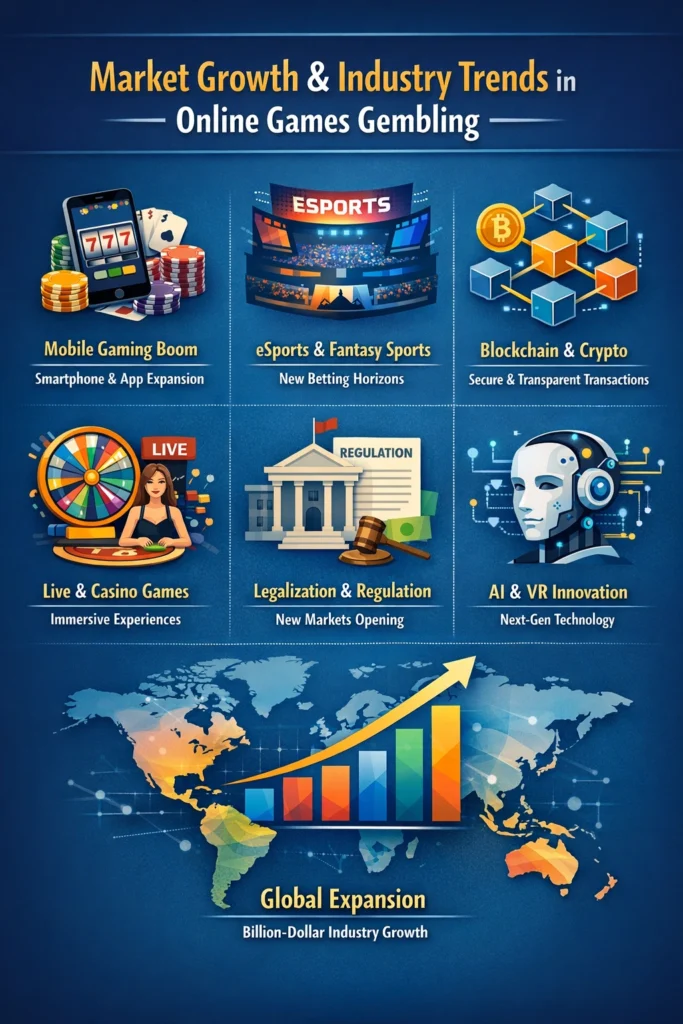
Online Games Gembling has experienced remarkable growth over the past decade, driven by rapid digital transformation, expanding internet penetration, and increasing smartphone usage. What began as a niche segment of the gaming industry has evolved into a multi-billion-dollar global market that continues to expand across continents.
One of the primary growth drivers is mobile technology. As smartphones become more affordable and high-speed internet becomes widely available, more users are gaining access to online gaming platforms. Mobile-first applications and responsive websites have made Online Games Gembling more convenient than ever, allowing players to participate anytime and anywhere.
Another major factor contributing to market expansion is the diversification of gaming options. Platforms now offer not only traditional casino games but also live dealer experiences, esports betting, fantasy sports competitions, and cryptocurrency-based gaming environments. This wide variety attracts different age groups and demographics, increasing overall participation rates.
The legalization and regulation of online gambling in several countries have also strengthened industry growth. Regulated markets provide consumer protection, transparent taxation systems, and investor confidence. As more governments recognize the revenue potential of licensed Online Games Gembling operations, new markets continue to open.
Technological innovation plays a crucial role in shaping industry trends. Artificial intelligence is being used to personalize user experiences and detect risky gambling behavior. Blockchain technology enhances transparency and security, while virtual reality and augmented reality are slowly introducing immersive casino environments.
Marketing strategies have evolved as well. Influencer partnerships, live streaming integrations, affiliate networks, and social media campaigns help platforms reach broader audiences. Gamification elements such as achievements, leaderboards, and reward systems further enhance engagement.
Despite rapid growth, the industry faces ongoing challenges. Regulatory differences between countries, cybersecurity threats, and concerns about gambling addiction require continuous attention. Companies that prioritize responsible gaming measures and transparent operations are more likely to sustain long-term success.
Looking ahead, Online Games Gembling is expected to continue expanding as digital infrastructure improves globally. The integration of advanced technologies, combined with regulatory development and consumer demand for interactive entertainment, positions the industry for steady evolution in the coming years.
Future Trends and Predictions in Online Games Gembling
The future of Online Games Gembling is closely tied to technological innovation and shifting consumer behavior. As digital ecosystems continue to expand, the industry is expected to evolve in ways that make platforms more immersive, secure, and personalized than ever before.
One of the most anticipated developments is the integration of virtual reality (VR) and augmented reality (AR). These technologies aim to create fully immersive casino environments where players can walk through virtual gaming floors, interact with dealers, and socialize with other participants in real time. This could bridge the gap between land-based casinos and digital platforms.
Artificial intelligence will play an even greater role in personalization and security. Advanced AI systems will analyze player behavior to offer customized game recommendations, tailored bonuses, and real-time risk alerts. At the same time, AI-driven monitoring tools will help detect fraud, suspicious betting patterns, and signs of problematic gambling behavior.
Blockchain technology is also expected to expand its influence. Decentralized gaming platforms may become more common, offering transparent and verifiable outcomes through smart contracts. Cryptocurrency adoption could increase due to faster transactions, lower fees, and enhanced privacy.
Another significant trend is the growth of esports and skill-based gaming. Younger audiences are increasingly drawn to competitive gaming environments, and betting platforms are adapting to meet this demand. Skill-based formats may continue to rise, blending entertainment with strategic gameplay elements.
Gamification will remain a major focus area. Loyalty programs, seasonal tournaments, achievement systems, and interactive story-based games will keep users engaged beyond traditional betting mechanics. Platforms may incorporate social features similar to social media networks, further strengthening community engagement.
Mobile technology will continue to dominate. As 5G networks expand globally, faster speeds and lower latency will enhance live streaming quality and real-time betting performance. Seamless cross-device integration will allow users to switch between mobile, tablet, and desktop platforms without interruption.
Regulatory frameworks are also likely to evolve. Governments may introduce stricter compliance standards, enhanced consumer protection policies, and clearer cryptocurrency regulations. Companies that prioritize transparency and responsible gaming practices will be better positioned for long-term sustainability.
In the coming years, Online Games Gembling is expected to become more interactive, data-driven, and globally interconnected. While growth opportunities remain strong, the industry’s future success will depend on balancing innovation with ethical responsibility and user protection.
Psychological Factors Behind Online Games Gembling
Online Games Gembling is not driven by technology alone; psychology plays a powerful role in why people participate and continue engaging with digital gambling platforms. Understanding these psychological factors helps explain both the appeal and the potential risks associated with online gaming environments.
One of the strongest psychological drivers is the concept of reward anticipation. The possibility of winning activates the brain’s reward system, releasing dopamine — a chemical associated with pleasure and motivation. Even near-miss outcomes can stimulate excitement, encouraging continued play. This cycle of anticipation and reward keeps users engaged for extended periods.
Another key factor is instant gratification. Unlike traditional casinos where travel and waiting are involved, online platforms provide immediate access to games and instant results. Fast gameplay, quick deposits, and rapid betting rounds create a high-speed environment that intensifies emotional responses.
The illusion of control also plays a significant role. In certain games like poker or sports betting, players may feel that skill and strategy influence outcomes. While skill can matter in some formats, chance remains a dominant factor in most gambling activities. This perceived control can increase confidence and participation.
Social interaction adds another psychological layer. Live dealer games, multiplayer tournaments, and chat features create a sense of community. Humans are naturally social beings, and shared experiences — even virtual ones — enhance engagement and enjoyment.
Bonuses and loyalty rewards leverage behavioral psychology techniques. Features such as limited-time offers, achievement badges, daily rewards, and progress bars trigger motivation patterns similar to those used in video games and social media platforms. These gamification strategies increase user retention.
However, psychological factors can also lead to challenges. The concept of loss chasing — attempting to recover previous losses by continuing to play — is a common behavioral pattern. Emotional decision-making, especially during stress or financial pressure, can amplify risky behavior.
Another important element is variable reinforcement schedules. This psychological principle explains why unpredictable rewards are more engaging than predictable ones. Slot machines and similar games operate on this model, where wins occur randomly, keeping players uncertain and engaged.
Understanding these psychological dynamics is essential for promoting responsible participation. Many modern platforms now implement protective tools such as spending limits, session reminders, and self-exclusion options to counterbalance potentially harmful behavioral patterns.
Ultimately, Online Games Gembling combines technology, entertainment, and human psychology into a powerful digital experience. Recognizing how psychological triggers operate empowers users to approach gaming with awareness, discipline, and informed decision-making.
Economic Impact and Revenue Model of Online Games Gembling

Online Games Gembling has grown into a powerful economic sector within the global digital marketplace. Beyond entertainment, it generates significant revenue streams for operators, governments, technology providers, and affiliated industries. Understanding the economic structure behind this industry reveals how platforms sustain profitability while maintaining operational stability.
Revenue Generation Model
The primary source of revenue in Online Games Gembling comes from the house edge. Every casino game is mathematically designed to provide the platform with a small statistical advantage over time. While individual players may win, the built-in probability ensures long-term profitability for the operator.
In sports and esports betting, revenue is generated through odds margins. Platforms adjust betting odds slightly below true probability, ensuring a percentage-based return regardless of the event outcome when bets are balanced.
Additional revenue streams include:
- Tournament entry fees
- In-app purchases
- VIP memberships
- Advertising partnerships
- Affiliate marketing commissions
These diversified income channels allow platforms to remain financially stable even during fluctuations in player activity.
Government Revenue and Taxation
In regulated markets, Online Games Gembling contributes significantly to government income through:
- Licensing fees
- Corporate taxes
- Betting duties
- Value-added tax (VAT)
This taxation revenue is often allocated to public services such as infrastructure, healthcare, and education. As more jurisdictions legalize and regulate online gambling, governments increasingly recognize its fiscal potential.
Employment and Industry Ecosystem
The industry supports a wide network of employment opportunities, including:
- Software developers
- Cybersecurity experts
- Customer support agents
- Payment processing specialists
- Marketing and affiliate managers
- Compliance and legal professionals
Live dealer studios, streaming infrastructure, and content production also generate jobs across multiple regions.
Additionally, technology vendors, game developers, and payment gateway providers form an interconnected ecosystem that strengthens the broader digital economy.
Market Competition and Investment
Online Games Gembling is highly competitive. Platforms invest heavily in:
- Software development
- Branding and marketing campaigns
- Sponsorship deals
- Security infrastructure
- Innovation research
Private investors and venture capital firms frequently fund emerging gaming startups, particularly those focused on blockchain and esports integration. Publicly traded gambling companies also attract institutional investment due to consistent revenue performance in regulated markets.
Economic Risks and Challenges
Despite its growth, the industry faces financial risks such as:
- Regulatory changes
- Market saturation
- Cybersecurity threats
- Reputational concerns
- Responsible gaming compliance costs
Platforms must continuously adapt to legal frameworks and consumer expectations to maintain sustainable profitability.
Long-Term Economic Outlook
The long-term outlook for Online Games Gembling remains strong due to digital expansion, mobile adoption, and increasing legalization. As global internet penetration rises and financial technologies improve, the market is expected to diversify further.
However, sustainable growth will depend on balancing profitability with ethical responsibility. Transparent operations, fair gaming standards, and consumer protection measures are critical for maintaining public trust and long-term economic stability.
Online Games Gembling is no longer just a form of entertainment—it is a structured digital economy that intersects with technology, finance, employment, and global regulatory systems.
Legal and Compliance Framework of Online Games Gembling
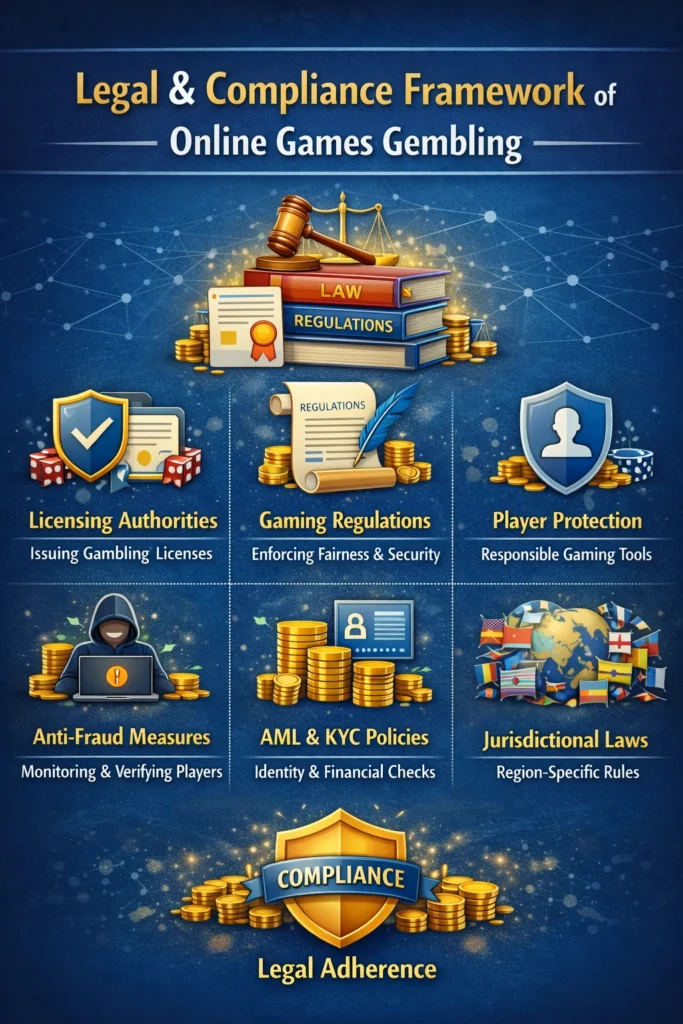
The legal landscape of Online Games Gembling varies significantly across countries and jurisdictions. While some regions fully regulate and license online gambling platforms, others restrict or completely prohibit digital betting activities. Understanding the legal framework is essential for both operators and players to ensure compliance and safe participation.
Global Regulatory Differences
Online Games Gembling operates under different legal models worldwide:
- Fully Regulated Markets – Governments issue licenses, enforce compliance standards, and collect taxes.
- Partially Regulated Markets – Certain types of online gambling may be allowed, while others remain restricted.
- Prohibited Markets – Online gambling activities are banned or heavily restricted.
Because laws frequently change, platforms must constantly adapt to evolving regulatory requirements.
Licensing Authorities
Licensed platforms must obtain approval from recognized regulatory bodies. These authorities oversee fair play, financial transparency, and consumer protection. A valid license typically requires:
- Background checks on company owners
- Financial audits
- Software testing and certification
- Responsible gaming implementation
- Anti-money laundering (AML) compliance
Licensing enhances trust and credibility while protecting users from fraudulent operators.
Age Verification and Player Protection
Most regulated jurisdictions require strict age verification to prevent underage gambling. Platforms use identity verification systems (KYC – Know Your Customer) to confirm user eligibility.
Additional player protection measures often include:
- Deposit limits
- Self-exclusion programs
- Reality check notifications
- Access to gambling support organizations
These safeguards are designed to minimize the social risks associated with online gambling.
Anti-Money Laundering (AML) and Financial Compliance
Online Games Gembling platforms must follow financial regulations to prevent illegal activities such as money laundering and fraud. AML protocols include:
- Monitoring suspicious transactions
- Reporting unusual financial behavior
- Verifying user identities
- Tracking high-value transfers
Compliance failures can result in heavy fines or license suspension.
Data Protection and Cybersecurity Laws
With large volumes of financial and personal data being processed, data protection regulations play a critical role. Platforms must comply with privacy laws that require:
- Secure data storage
- Transparent privacy policies
- Encrypted payment systems
- Protection against unauthorized access
Failure to safeguard user data can lead to legal penalties and reputational damage.
Advertising and Marketing Regulations
Many jurisdictions regulate how Online Games Gembling can be advertised. Restrictions may include:
- Prohibiting ads targeting minors
- Limiting promotional claims
- Restricting bonus marketing
- Mandating responsible gambling disclaimers
Ethical marketing is increasingly emphasized to prevent exploitation of vulnerable individuals.
Cross-Border Challenges
Since online platforms operate digitally, cross-border legal conflicts often arise. A company licensed in one country may not legally operate in another without authorization. Geo-blocking technology is commonly used to restrict access in prohibited regions.
Future of Regulation
As Online Games Gembling continues to grow, governments are expected to introduce clearer frameworks for cryptocurrency gambling, esports betting, and emerging technologies such as VR casinos. Stronger international cooperation may also develop to standardize compliance practices.
In conclusion, legal and compliance structures form the backbone of a sustainable Online Games Gembling industry. Proper regulation protects consumers, ensures fair competition, and strengthens long-term market stability.
Frequently Asked Questions (FAQ) About Online Games Gembling
Below are some of the most commonly asked questions about Online Games Gembling to help readers better understand the industry, its risks, and how it works.
1. What is Online Games Gembling?
Online Games Gembling refers to digital platforms that allow users to participate in casino games, sports betting, esports wagering, fantasy leagues, and other betting-related activities through the internet. These platforms operate via websites or mobile applications and offer real-money gaming options.
2. Is Online Games Gembling legal?
The legality of Online Games Gembling depends on the country or region. Some jurisdictions fully regulate and license online gambling, while others restrict or ban it. Users should always check local laws before participating.
3. How do Online Games Gembling platforms make money?
Platforms generate revenue primarily through the house edge in casino games and margin adjustments in betting odds. Additional income may come from tournament fees, advertising partnerships, and VIP memberships.
4. Are online casino games fair?
Licensed platforms use Random Number Generator (RNG) systems to ensure fair and unpredictable outcomes. Reputable operators often undergo independent audits to verify game fairness and payout percentages.
5. What payment methods are available?
Most Online Games Gembling platforms accept multiple payment options, including:
- Debit and credit cards
- Bank transfers
- Digital wallets
- Cryptocurrencies
Payment availability may vary by region.
6. Can players really win money?
Yes, players can win real money. However, gambling outcomes are based on probability, and long-term profits are not guaranteed. Responsible budgeting and risk awareness are essential.
7. What is responsible gaming?
Responsible gaming refers to practices that help players manage their gambling behavior. These include setting deposit limits, using self-exclusion tools, and avoiding emotional or impulsive betting.
8. Is Online Games Gembling safe?
Safety depends on choosing licensed and regulated platforms. Secure websites use encryption, identity verification, and fraud monitoring systems to protect users’ data and financial transactions.
9. What are the risks involved?
The primary risks include financial loss, potential addiction, cybersecurity threats, and legal complications in restricted regions. Understanding these risks helps players make informed decisions.
10. What is the future of Online Games Gembling?
The industry is expected to grow through advancements in artificial intelligence, blockchain integration, virtual reality casinos, and expanded mobile technology. Regulation and responsible gaming initiatives will likely become stronger as the market evolves.
Conclusion
Online Games Gembling has firmly established itself as a powerful force in the digital entertainment world. What once required physical presence in casinos or betting centers has now transformed into a seamless online experience accessible from anywhere. With advanced technology, secure payment systems, live dealer interactions, esports integration, and mobile-first platforms, the industry continues to evolve at a rapid pace.
The growth of Online Games Gembling is fueled by innovation, convenience, and global connectivity. Artificial intelligence enhances personalization and security, blockchain increases transparency, and mobile technology ensures uninterrupted access. At the same time, regulated markets provide structured frameworks that protect users and support economic development through taxation and job creation.
However, alongside opportunity comes responsibility. Financial risk, behavioral concerns, and cybersecurity threats require awareness and disciplined participation. Responsible gaming tools, transparent policies, and informed decision-making are essential for maintaining a balanced experience. Players should always choose licensed platforms, understand the rules, and set personal limits before engaging.
For a secure and reliable gaming experience, you can explore trusted platforms like lemonbook which offer modern digital gaming features and user-focused systems. Additionally, external platforms such as goexch9 provide alternative gaming environments depending on user preference.
As technology continues to advance and regulatory systems mature, Online Games Gembling is expected to become even more immersive, data-driven, and globally integrated. The future of digital gaming lies in balancing innovation with ethical standards and player protection.
Ultimately, Online Games Gembling is more than just entertainment—it is a rapidly expanding digital ecosystem combining technology, finance, psychology, and global connectivity. When approached responsibly, it can remain an engaging and evolving part of the modern online experience.
 Get WhatsApp ID Now