

Introduction
Competition has always been a part of human nature. From traditional sports played on open fields to board games played around a table, people have always enjoyed testing their skills against others. However, with the rapid growth of the internet and digital technology, the concept of competition has changed dramatically. Today, matches are no longer limited by physical location or time. Players from different cities, countries, and even continents can compete with each other instantly through online platforms.
An online match is more than just a game played on a screen. It represents interaction, strategy, teamwork, and real-time decision-making in a virtual environment. Whether it is a casual mobile game, a virtual chess battle, an educational quiz competition, or a professional esports tournament, online matches have become a common part of everyday life. They connect people globally and create opportunities that were once impossible in traditional forms of competition.
As technology continues to evolve, online matches are not only changing entertainment but also influencing education, careers, and social relationships. This article explores how online matches work, why they are popular, and what they mean for the future of competition in the digital age.
What Is an Online Match?
An online match is a competitive activity conducted through the internet where two or more participants compete in real time or in scheduled rounds using digital platforms. Unlike traditional matches that require players to gather in the same physical location, online matches allow individuals to participate from anywhere in the world using computers, mobile devices, or gaming consoles.
The defining feature of an online match is connectivity. Players interact through servers that synchronize actions instantly, creating a shared competitive environment. This interaction can be one-on-one, team-based, or large multiplayer formats involving dozens or even hundreds of participants simultaneously.
Online matches are not limited to gaming alone. They appear in multiple fields such as virtual chess competitions, quiz contests, coding challenges, fantasy sports leagues, and simulation-based tournaments. The purpose remains the same — participants test their skills, strategy, knowledge, or reflexes against others within a structured rule system.
In many platforms, matchmaking systems automatically pair competitors with similar skill levels. This ensures balanced competition and improves the experience for beginners and experienced players alike. Rankings, leaderboards, and performance statistics further enhance motivation and encourage continuous improvement.
Overall, an online match represents the digital evolution of competition, combining technology with human skill to create an environment where distance no longer limits participation.
The Evolution of Online Matches
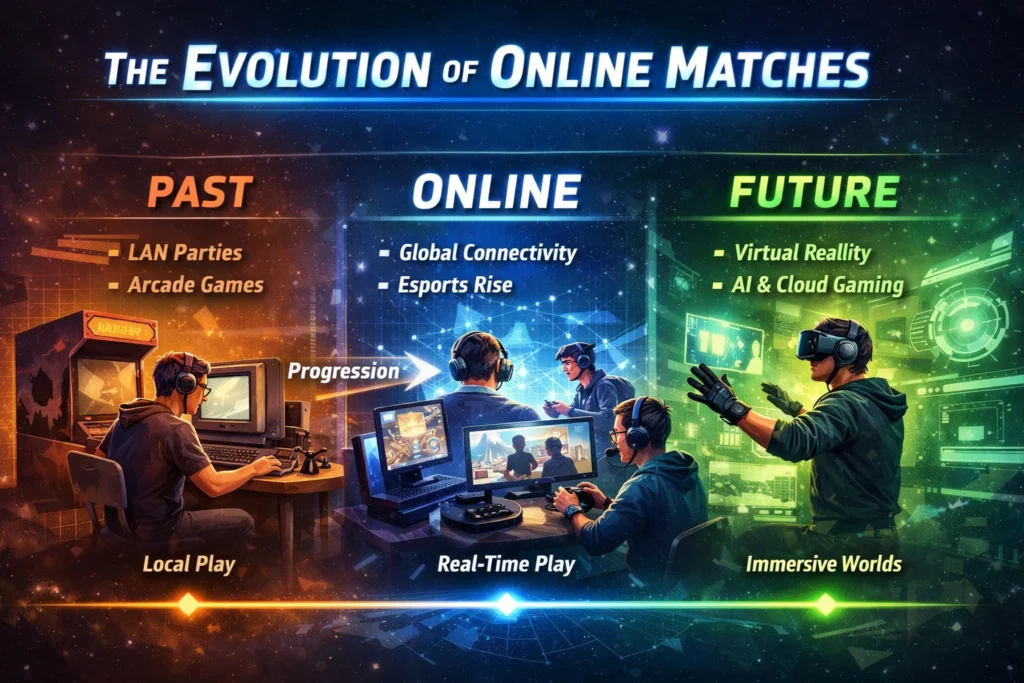
Online matches did not appear suddenly in their modern advanced form. They developed gradually alongside improvements in internet technology and digital communication. In the early days of computing, multiplayer competition was limited to local networks where players needed to be physically present in the same room. Friends would connect computers using cables and compete in small local sessions. While exciting at the time, these matches were restricted by distance and equipment availability.
With the expansion of the internet in the late 1990s and early 2000s, online connectivity changed everything. Players could now connect through dial-up connections and compete from different homes. Although speeds were slow and disconnections were common, this marked the true beginning of remote digital competition. The idea that someone could challenge another person living hundreds of kilometers away felt revolutionary.
As broadband internet became widely available, the quality of online matches improved significantly. Faster speeds reduced delays, making real-time interaction smoother and more reliable. Developers introduced dedicated servers that hosted matches and synchronized player actions instantly. This allowed larger numbers of participants to compete together in stable environments.
Soon after, ranking systems and automatic matchmaking were introduced. Instead of manually inviting opponents, players could press a single button and be paired with someone of similar skill level. This created fairness and encouraged competitive progression. Players began caring about statistics, win rates, and leaderboards, transforming casual play into structured competition.
Streaming technology brought another major shift. Matches were no longer limited to participants; spectators could now watch live competitions online. This gave rise to digital audiences who followed their favorite players and teams. Commentators analyzed gameplay, tournaments attracted sponsorships, and organized competitive gaming turned into a professional scene.
Over time, online matches expanded beyond entertainment. Educational competitions, remote hackathons, and virtual sports simulations adopted the same competitive format. What began as a simple connection between two computers evolved into a global ecosystem involving players, viewers, organizers, and entire communities.
Today, online matches represent a mature digital competition system supported by advanced servers, real-time communication tools, and global participation. The journey from local connections to worldwide tournaments highlights how technology has reshaped the meaning of competition itself.
Types of Online Matches
Online matches exist in many different forms, each designed for a particular level of competition and player involvement. Some are meant purely for fun, while others demand serious practice, teamwork, and discipline. Understanding these types helps explain why online competition appeals to such a wide range of people.
Casual Online Matches
Casual matches are the most common and accessible form of online competition. Players join quickly without preparation, long schedules, or pressure to win. These matches are typically short and simple, allowing participants to relax and enjoy the experience.
Many people play casual matches during breaks, after school, or in their free time. The goal is entertainment rather than achievement. Players may compete with friends or be randomly paired with strangers. Because the stakes are low, mistakes feel less frustrating, making casual matches ideal for beginners learning the basics.
Ranked Competitive Matches
Ranked matches introduce structure and progression. Players earn points for winning and lose points for losing, which places them into skill divisions or tiers. As performance improves, players move up the ranking ladder and face stronger opponents.
This format encourages learning and consistency. Participants begin analyzing strategies, practicing techniques, and improving teamwork. Ranked matches create a sense of achievement because advancement reflects actual improvement rather than luck. Many players find this mode motivating because each match directly affects their standing.
Tournament-Based Online Matches
Tournament matches are organized events held at scheduled times. Participants register beforehand and compete in elimination rounds until a winner is determined. These events often follow official rules and may include referees or moderators to ensure fairness.
Some tournaments are small community competitions organized among friends or local groups. Others attract large numbers of players from different regions. Preparing for a tournament usually involves practice sessions and planning, making the experience more serious and memorable than everyday matches.
Professional and Esports Matches
At the highest level are professional online matches. Skilled players form teams, train regularly, and compete in major competitions watched by audiences around the world. These matches demand intense concentration, coordination, and fast decision-making.
Professional matches are carefully scheduled and broadcast live. Commentators discuss strategies, spectators cheer for their favorite teams, and results can influence careers. For participants, online competition becomes more than recreation — it becomes a profession requiring dedication and discipline.
Educational and Skill-Based Matches
Not all online matches are about games. Many platforms host competitions based on knowledge and practical skills. Examples include quizzes, coding challenges, debates, and puzzle-solving contests. Students and professionals participate to test their abilities and learn from others.
These matches emphasize learning rather than entertainment. Participants gain confidence, problem-solving ability, and real-world experience while competing in a structured environment.
Advantages of Online Matches
Online matches have become popular not only because they are entertaining, but also because they provide practical benefits to players and communities. They combine competition with accessibility, making participation easier than traditional forms of competitive activity. Below are some of the most important advantages.
Global Connectivity
One of the biggest strengths of online matches is the ability to connect people across the world. A participant can compete with someone living in another country without leaving home. This creates opportunities to interact with different cultures, languages, and playing styles.
Such global interaction helps players become more adaptable. They learn new strategies and communication methods while gaining exposure to diverse perspectives. The competition becomes richer because opponents are not limited to a single local environment.
Easy Accessibility
Traditional matches often require travel, equipment, and a specific venue. Online matches remove these barriers. Anyone with a stable internet connection and a suitable device can participate. This makes competition more inclusive for people who may not have access to physical facilities.
Students, working professionals, and individuals living in remote areas can all join equally. The convenience of participating from home encourages more people to explore competitive activities they might otherwise avoid.
Skill Development
Online matches improve multiple abilities beyond basic gameplay. Participants gradually develop concentration, quick thinking, and planning skills. In team-based environments, communication and coordination become essential.
Players learn how to make decisions under pressure, manage time effectively, and adapt to unexpected situations. These skills are valuable not only in competition but also in academic and professional life. Continuous participation naturally builds confidence and discipline.
Learning Through Experience
Unlike passive entertainment, online matches require active involvement. Each round teaches something new — recognizing mistakes, adjusting strategies, and understanding opponents’ behavior. Over time, players improve through experience rather than memorization.
This learning process feels engaging because progress is visible. Advancing in rankings or performing better than before motivates players to keep practicing and improving.
Career Opportunities
For some individuals, online matches open pathways to professional opportunities. Skilled competitors may become professional players, coaches, commentators, or content creators. Even outside gaming, participating in coding contests or knowledge competitions can strengthen resumes and attract employers.
Digital competition environments also help individuals showcase talent publicly. Recognition gained from performance can lead to collaborations, sponsorships, or career growth in technology-related fields.
Entertainment and Relaxation
Despite competitive elements, online matches remain a source of enjoyment. They provide a break from routine activities and allow people to unwind while staying mentally active. Playing with friends adds social value, turning matches into shared experiences rather than solitary activities.
Balanced participation can refresh the mind and reduce stress, especially when treated as a healthy hobby rather than an obligation.
Challenges and Concerns of Online Matches
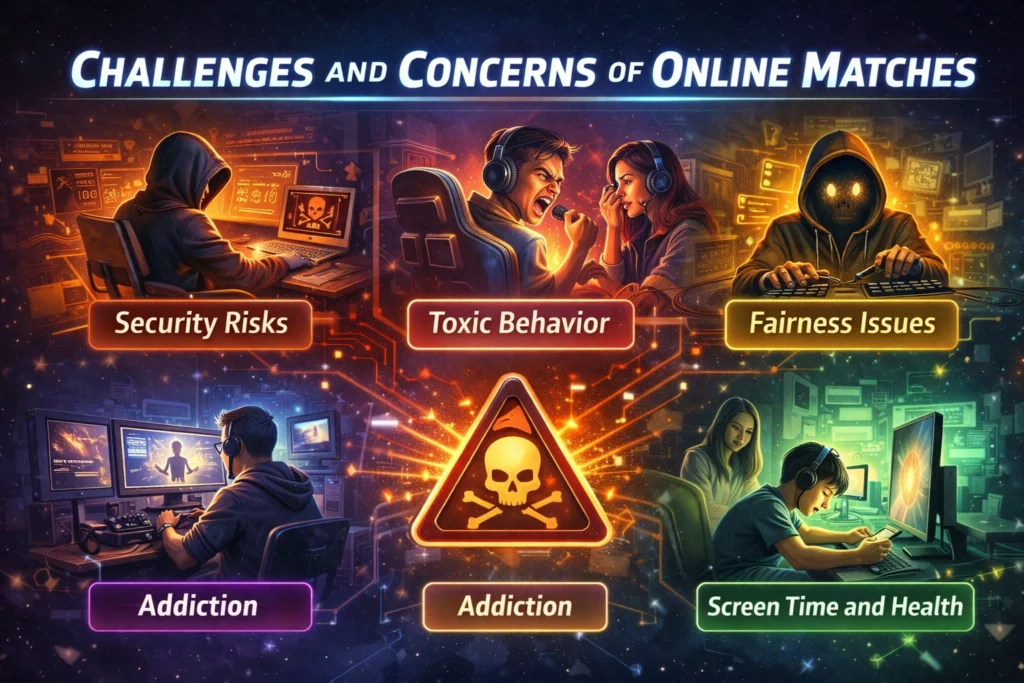
Although online matches offer many advantages, they also come with certain difficulties that players and platforms must address. Understanding these challenges helps create a healthier and more balanced competitive environment.
Internet Connectivity Problems
Online competition depends entirely on a stable internet connection. Slow speed or interruptions can cause delays, often called lag, which affects reaction time and accuracy. A player may lose not because of lack of skill but because the connection fails at a critical moment.
This can be frustrating and sometimes unfair, especially in important matches. While technology continues to improve, connection quality still varies depending on location and network conditions.
Unfair Play and Cheating
Some participants attempt to gain an advantage by using unauthorized software or exploiting system weaknesses. Cheating damages the integrity of competition and reduces trust among players.
To address this, platforms implement security systems that detect unusual behavior and block offenders. However, maintaining fairness remains an ongoing challenge because new methods of cheating constantly appear.
Negative Behavior and Communication
Online anonymity can sometimes encourage disrespectful behavior. Insults, harassment, and unsportsmanlike conduct may occur during heated competition. Such interactions can reduce enjoyment and discourage new participants from joining.
Communities and organizers increasingly introduce reporting tools, moderation systems, and behavior guidelines to promote respectful communication and positive interaction.
Excessive Screen Time
Because online matches are easily accessible, players may spend long hours participating without breaks. Extended screen exposure can affect sleep patterns, posture, and eye comfort if not managed carefully.
Maintaining balance is important. Taking regular breaks, stretching, and limiting continuous play sessions help prevent unhealthy habits while preserving enjoyment.
Skill Gap and Frustration
In competitive environments, beginners sometimes face highly experienced opponents. Large differences in skill level can lead to discouragement and reduced confidence.
Matchmaking systems attempt to solve this by pairing players with similar abilities, but perfection is difficult to achieve. Patience and gradual improvement are necessary for new participants to stay motivated.
Digital Inequality
Not everyone has access to high-quality devices or fast internet connections. This creates an uneven playing field where some players enjoy smoother performance than others. As technology spreads, this gap is shrinking, yet it still affects participation in certain regions.
Social Impact of Online Matches
Online matches are not only about competition; they also influence how people interact and build relationships in the digital world. Over time, they have created communities where communication, cooperation, and shared interests bring individuals together beyond geographical boundaries.
Building Global Communities
Players often meet strangers during matches and gradually form friendships through repeated interaction. Teams, groups, and online clubs emerge where members regularly practice and participate together. These communities may include people from different countries who would otherwise never meet in everyday life.
Shared goals strengthen connections. Preparing for matches, discussing strategies, and celebrating victories together creates a sense of belonging. For many participants, these digital communities become an important part of their social life.
Improving Communication Skills
Online matches require clear communication, especially in team-based competition. Players learn to give instructions, listen carefully, and coordinate actions quickly. Over time, they develop confidence in expressing ideas and responding to feedback.
Because teammates often speak different languages or come from different cultures, players adapt their communication style to be more understandable and respectful. This encourages patience and cooperation in diverse environments.
Encouraging Teamwork and Cooperation
Success in many online matches depends on collaboration rather than individual performance. Players must support each other, share responsibilities, and adjust roles according to the situation. Learning to trust teammates and work toward a common objective strengthens cooperative behavior.
These teamwork experiences can influence real-life situations as well. Participants become more comfortable working in groups and managing collective tasks.
Emotional Support and Belonging
For some individuals, especially those who feel isolated in physical surroundings, online match communities provide comfort and connection. Regular interaction with familiar teammates can reduce feelings of loneliness and create supportive relationships.
Celebrating achievements together and encouraging each other after losses builds positive emotional bonds. The competitive environment becomes not only a challenge but also a shared journey.
Cultural Exchange
Online matches naturally bring together people from different backgrounds. Players encounter new languages, customs, and viewpoints while interacting during gameplay. Even simple conversations can expand understanding and appreciation of global diversity.
Through repeated interaction, participants learn tolerance and respect. Competition becomes a platform for cultural exchange rather than conflict.
Technology Behind Online Matches
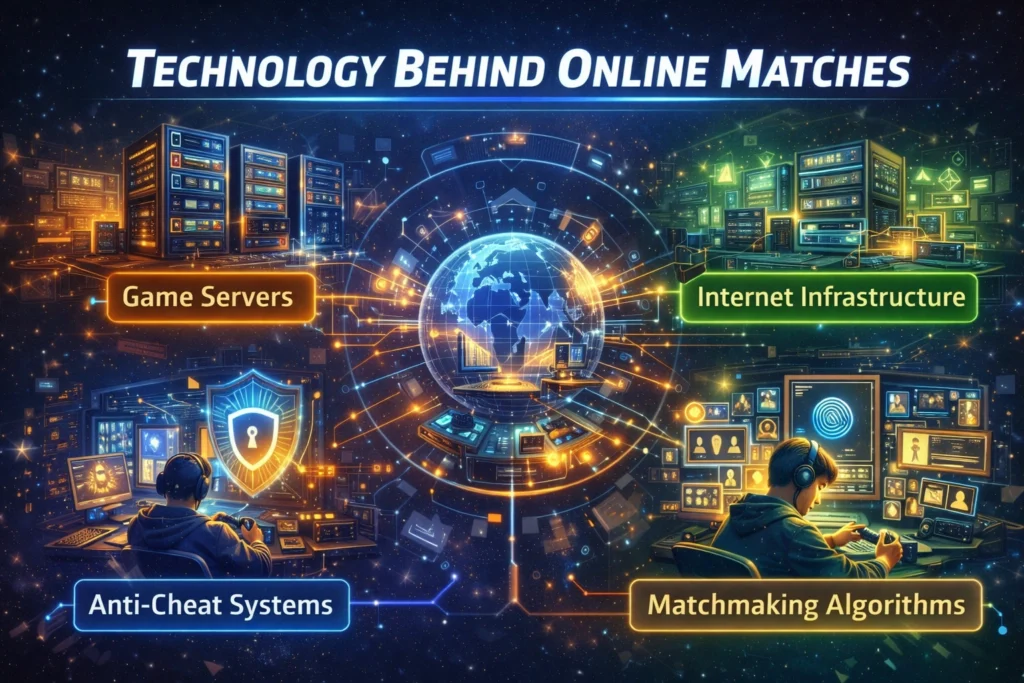
Online matches function smoothly because of complex technologies working in the background. While players only see the screen and controls, multiple systems operate simultaneously to connect participants, synchronize actions, and maintain fairness. Understanding this technology helps explain how real-time competition is possible across long distances.
Game Servers and Networking
At the center of every online match is a server. The server acts as the main coordinator, receiving data from each player and updating the match environment instantly. Whenever a player moves, attacks, answers, or performs an action, the information travels to the server and is shared with others.
Modern servers are designed to handle thousands of players at the same time. They ensure that every participant sees the same events happening simultaneously, reducing confusion and maintaining accuracy during competition.
Matchmaking Systems
Matchmaking algorithms automatically pair participants with similar skill levels. Instead of manually searching for opponents, players enter a queue and the system finds balanced competition. The algorithm considers performance history, ranking, and sometimes connection quality.
Balanced matchmaking improves fairness and enjoyment. Beginners avoid overwhelming opponents, while experienced players face appropriate challenges that keep matches engaging.
Real-Time Communication
Voice chat, text messaging, and quick command systems allow players to coordinate during matches. These communication tools operate with minimal delay so teammates can react immediately to changing situations.
Low latency communication is especially important in fast-paced competition, where even a small delay can affect results. Continuous technological improvements aim to make interactions feel natural despite long distances.
Anti-Cheat and Security Systems
To maintain fair competition, platforms implement protective software that monitors unusual behavior. These systems detect unauthorized programs, abnormal patterns, or suspicious actions and prevent unfair advantages.
Security also protects personal data and accounts. Encryption methods safeguard communication between players and servers, reducing the risk of hacking or information theft.
Cloud and Cross-Platform Technology
Cloud technology allows matches to run on powerful remote machines instead of local devices. This enables players with modest hardware to participate smoothly because heavy processing occurs elsewhere.
Cross-platform systems further expand accessibility by allowing users on different devices to compete together. A player using a computer can join a match with someone using a mobile device or console, increasing participation and community size.
Future Technologies
Emerging technologies such as virtual reality and advanced network systems promise even more immersive competition. Faster connections will reduce delays almost completely, while realistic environments may make digital matches feel closer to physical experiences.
The Future of Online Matches
Online matches continue to evolve as technology advances and digital lifestyles expand. What began as simple remote competition is gradually becoming a sophisticated and immersive experience. The future will likely bring deeper interaction, improved fairness, and broader participation across different areas of life.
More Immersive Experiences
New technologies are making virtual environments feel increasingly realistic. Enhanced graphics, responsive controls, and interactive surroundings will make participants feel more present inside the match rather than just observing it through a screen. As realism improves, the boundary between physical and digital competition will become less noticeable.
Players may eventually interact with environments using natural movements instead of traditional controllers. This could make online competition more engaging and physically active while still maintaining the convenience of remote participation.
Faster and More Stable Connectivity
Advances in network infrastructure are reducing delays and improving reliability. Faster connections allow actions to be synchronized almost instantly, making matches smoother and fairer for participants in different regions. Stable connectivity also enables larger competitions with many participants interacting simultaneously without performance issues.
As internet access spreads to more areas, people who previously could not participate will gain opportunities to join global competitions.
Expansion Beyond Entertainment
Online matches are expected to grow beyond gaming and recreation. Educational institutions may increasingly use competitive online formats for assessments and collaborative learning. Businesses may adopt match-based simulations for training, problem-solving exercises, and recruitment evaluation.
Skill-based competitions could become common methods for identifying talent because performance can be measured objectively in real time.
Personalized Match Environments
Future systems may adapt to individual preferences and skill levels automatically. Intelligent systems could adjust difficulty, suggest training exercises, and create customized competitive experiences. This would help beginners learn comfortably while still challenging experienced participants.
Personalized environments would encourage long-term participation by keeping competition engaging without becoming overwhelming.
Hybrid Competitive Models
Physical and digital competition may combine more frequently. Preliminary rounds could occur online to allow global participation, while final rounds take place in live venues for spectators. This approach preserves accessibility while maintaining the excitement of in-person events.
Hybrid formats also allow organizers to include more participants without requiring extensive travel, reducing costs and increasing inclusivity.
Conclusion
Online matches have transformed the traditional idea of competition by removing the limits of distance and location. What once required physical presence in a specific venue can now take place instantly between participants across the world. Through digital platforms, people compete, cooperate, learn, and connect in ways that were impossible only a few decades ago.
From casual entertainment to organized tournaments and professional events, online matches now serve multiple purposes. They provide enjoyment, improve skills, encourage teamwork, and even open new digital opportunities. Many platforms now support structured participation where users can explore match formats, understand rules, and experience competitive environments more conveniently. For example, users often discover related competitive ecosystems through resources like onlinecricketid, bettingidindia, and casinoidworld that explain different types of online participation models across digital gaming communities.
At the same time, communities and platforms continue to grow through partnerships and dedicated environments that help users stay connected. The main platform lemonbook works as an internal hub where participants can explore matches, understand formats, and remain part of a consistent competitive space supported by partner networks.
Despite their many benefits, online matches require responsible participation. Maintaining respectful behavior, managing screen time, and ensuring fair play are essential for preserving a positive environment. When balanced properly, digital competition can be engaging, social, and skill-building rather than overwhelming.
As technology continues to advance, online matches will likely become even more interactive and accessible. Faster connections, smarter systems, and immersive environments will further strengthen their role in everyday life. Rather than replacing traditional competition, they expand it, offering new ways for people to challenge themselves and connect with others.
Ultimately, online matches represent more than just games — they reflect how human interaction adapts to technological progress, turning competition into a global shared experience supported by evolving digital communities and partnerships.
Frequently Asked Questions (FAQs)
1. What is an online match?
An online match is a competition that takes place over the internet where players or participants compete with each other in real time or scheduled rounds using digital platforms such as games, quizzes, or virtual tournaments.
2. Do I need special equipment to join an online match?
No special equipment is usually required. Most online matches can be played using a smartphone, computer, or tablet with a stable internet connection. Some advanced competitions may benefit from better hardware, but it is not mandatory for beginners.
3. Are online matches only related to gaming?
No. While gaming is the most common form, online matches also include quiz competitions, coding challenges, virtual sports simulations, and educational contests. Any structured digital competition can be considered an online match.
4. Can beginners participate in online matches?
Yes. Many platforms use matchmaking systems that pair players with similar skill levels, allowing beginners to compete comfortably and gradually improve their abilities.
5. Are online matches safe?
Online matches are generally safe if played on trusted platforms and with proper privacy precautions. Players should avoid sharing personal information and follow platform guidelines to maintain security.
6. Can online matches improve skills?
Yes. They help improve decision-making, concentration, communication, teamwork, and problem-solving abilities. Educational and strategy-based matches can also enhance learning and critical thinking.
7. Is internet speed important for online matches?
Yes. A stable internet connection is important because delays or disconnections can affect performance and overall experience during real-time competition.
8. Can online matches become a career?
For skilled participants, online matches can lead to opportunities such as professional competition, coaching, streaming, or content creation. Some competitions also help individuals gain recognition in technical or academic fields.
9. How can I maintain balance while playing online matches?
Set time limits, take regular breaks, maintain proper posture, and treat matches as a hobby rather than a continuous activity. Balanced participation keeps the experience enjoyable and healthy.
10. Why are online matches becoming popular?
They are accessible, convenient, and allow global interaction. People can compete, socialize, and improve skills without traveling, which makes online matches suitable for modern digital lifestyles.
 Get WhatsApp ID Now